
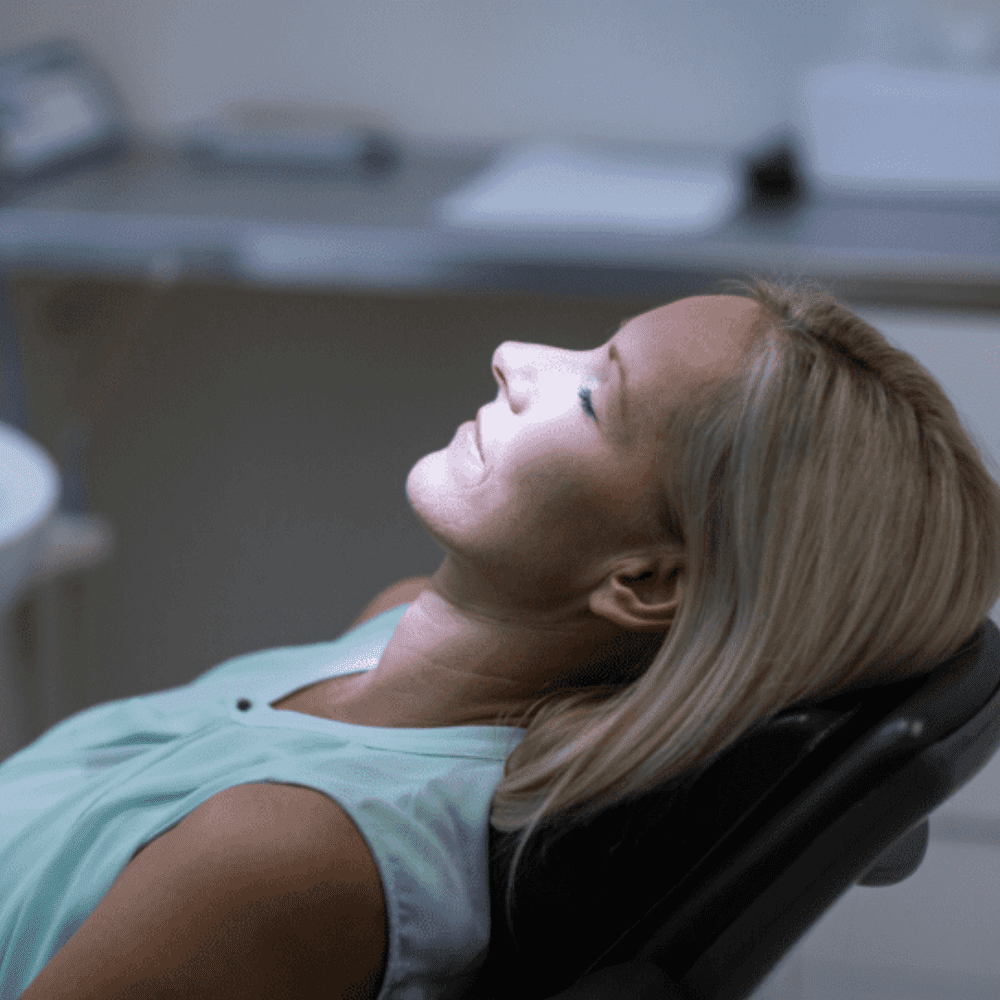
A Complete Guide to Sedation Dentistry
For many people, the hardest part of dental care isn’t the procedure itself… it’s the fear leading up to it.
The racing thoughts. The tight chest. The “What if something goes wrong?” feeling you can’t shake.
If that sounds familiar, you’re not weak - you’re human. And sedation dentistry exists for one simple reason: no one should have to suffer, panic, or avoid care that could protect their health and quality of life.
At ProSmile Dental Implant Center, sedation dentistry isn’t an add-on or a convenience. It’s a carefully designed system; one built around safety, comfort, and trust - guided by Board-Certified Oral & Maxillofacial Surgeons and a dedicated, in-house Dental Anesthesiologist.
This guide will walk you through:
- What sedation dentistry actually is (and what it isn’t)
- The different levels of dental sedation and anesthesia
- Who sedation is right for
- What it feels like
- How much it costs
- And most importantly, how to choose the safest provider in Arizona
Why Sedation Dentistry Exists (and Why It Matters More Than You Think)
Wisdom teeth sit deep in the bone, often angled sideways, pressing into nerves or neighboring teeth. Removing them requires surgical precision, and complete patient comfort. That’s why most high-level surgical centers use IV sedation or general anesthesia, not just numbing injections.
Many patients believe dental fear is something they should just “push through.”
But avoiding dental care often leads to:
- More complex procedures later
- Higher costs
- Worse outcomes
- And even greater anxiety the next time around
Sedation dentistry changes that story.
Instead of asking you to endure discomfort, fear, or trauma, it allows your care to happen calmly, predictably, and safely, while you remain relaxed (or even fully asleep) throughout the procedure.
As Dr. Aaron Roberts, ProSmile’s in-house Dental Anesthesiologist, explains:
“Our job is to alleviate fear and anxiety so you’re essentially not ‘there’ for the surgery. Safety is always the priority, but a very close second is your comfort and overall experience.”
What Is Sedation Dentistry?
Sedation dentistry uses carefully administered medications to help patients relax, reduce anxiety, block pain, and, in some cases, sleep through dental procedures entirely.
But not all sedation is the same.
Sedation exists on a spectrum, ranging from light relaxation to full general anesthesia. Understanding that spectrum is critical to making the right decision for your health and peace of mind.
The Different Types of Sedation Dentistry (Explained Simply)
1. Minimal Sedation (Oral Sedation / Nitrous Oxide)
- You’re awake but relaxed
- Anxiety is reduced, but awareness remains
- Best for mild anxiety and simple procedures
Limitations: This level of sedation is often not sufficient for surgical procedures, complex extractions, or patients with significant dental fear.
2. Moderate Sedation (IV Conscious Sedation)
- Administered through an IV
- You remain technically awake but deeply relaxed
- Little to no memory of the procedure
This is one of the most commonly used forms of sedation for oral surgery. As Dr. Roberts explains:
“You’ll come in nervous, we’ll place monitors and an IV, and the next thing you remember is waking up, and everything is done.”
3. Deep Sedation
- You’re asleep and not aware of the procedure
- You still breathe on your own
- Requires advanced monitoring and training
Deep sedation is often used when general anesthesia isn’t medically necessary, but a deeper level of unconsciousness is preferred.
4. General Anesthesia (Dental Surgery)
- Complete unconsciousness
- No awareness, no pain, no memory
- Used for complex surgeries and medically appropriate cases
This level of anesthesia is rare in private dental practices because it requires specialized training, equipment, and strict patient selection protocols.
“General anesthesia can only be provided by dentists who’ve completed an anesthesia residency,” Dr. Roberts notes. “That’s why most offices simply don’t offer it.”
Who Should Be Managing Your Dental Anesthesia?
This is one of the most important (and least discussed) questions in dentistry.
In many offices:
- Sedation is administered by the same dentist performing the procedure
- Or supervised indirectly
- Or limited to lighter forms of sedation
At ProSmile, anesthesia is handled by a dedicated Dental Anesthesiologist whose sole responsibility is your safety and comfort.
“My entire training is anesthesia,” Dr. Roberts explains. “That’s what I focus on - monitoring, medications, patient response - while the surgeons focus on the surgery.”
This separation of roles mirrors hospital-level surgical care, dramatically increasing safety and predictability.
Why ProSmile’s Sedation Model Is Different
ProSmile is designed as a true surgical center, not a standard dental office.
Here’s what sets it apart:
- In-house Dental Anesthesiologist (not rotating or outsourced)
- Board-Certified Oral & Maxillofacial Surgeons
- Continuous vital monitoring throughout surgery
- Strict patient screening and selection
- Immediate post-op access to your surgical team
- An in-house lab for custom prosthetics and restorations
As Dr. Velangi explains:
“If I needed LASIK, I’d only go to an ophthalmologist. The same applies here. Wisdom teeth, implants… these are surgeries. You want a surgeon.”
What Our Patients Are Saying About Our Sedation Dentistry

Got 4 wisdom teeth removed, everyone was amazing. Very nice and comforting. Special shout out to the anesthesiologist, he did a fantastic job reassuring me and making me feel comfortable especially considering I had past experiences when I wasnt numbed/put to sleep properly. Woke up feeling great. Very happy I went here.
Molly Orszulak
Dr. Velangi did excellent work and treated my daughter with such kindness. Dr. Roberts, the anesthesiologist, went above and beyond to make her feel comfortable, helped her relax and even smile. This was my daughter’s first time going under anesthesia, and I felt completely safe with the team caring for her. Their calm, confident, and compassionate approach made all the difference.
Kyleigh Hall
Awesome experience. The anesthesiologist Dr Robert's, explained what he was using and how quickly I would go to sleep. It took less than 5 seconds. I did not even feel the needle. The next thing I knew, I was waking up and going home. I felt absolutely nothing! I highly recommend ProSmile Dental and Dr Velangi for any and all oral surgery!
Blanca Fedele
Is Sedation Dentistry Safe?
When done properly, yes, extremely safe.
Serious complications are rare and typically involve:
- Emergency medical situations
- Patients with severe, unmanaged health conditions
- Improper screening or monitoring
At ProSmile, patient selection is key.
“In private practice, we’re very particular,” says Dr. Roberts. “If someone isn’t an ideal candidate, we refer them to a hospital setting. Safety always comes first.”
Honesty also matters. Factors like certain medications, red hair genetics, or marijuana use can affect anesthesia needs.
“If patients are open with us, we can tailor anesthesia specifically to them,” Dr. Roberts explains.
Who Is a Good Candidate for Sedation Dentistry?
Sedation dentistry may be ideal if you:
- Experience dental anxiety or fear
- Need oral surgery or dental implants
- Have a strong gag reflex
- Have difficulty sitting still
- Had a previous traumatic dental experience
- Need multiple procedures completed efficiently
You don’t need to “qualify” emotionally; your comfort matters.
Sedation Dentistry Cost: What to Expect
As a family and doctor-owned practice, ProSmile doesn't have any corporate or third-party overhead, and we pass the savings down to our patients. We're proud to offer affordable sedation options.
Sedation is typically priced separately from the dental procedure itself. The cost of sedation varies based on:
- Type of sedation
- Length of procedure
- Medical complexity
- Level of monitoring required
While sedation does add cost, it also adds:
- Safety
- Predictability
- Comfort
- Faster procedures
- Better overall experiences
For many patients, it’s an investment in peace of mind.
What Sedation Dentistry Feels Like
Most patients describe sedation as:
- Feeling calm
- Feeling drowsy
- Losing track of time
- Waking up with the procedure complete
“For most people, it feels like moments have passed,” Dr. Roberts explains. “That’s one of the biggest surprises.”
Common Myths About Sedation Dentistry
“It’s dangerous.”
When properly administered, sedation is one of the safest procedures in dentistry.
“It’s only for extreme cases.”
Sedation is for comfort, not weakness.
“Any dentist can do it.”
Advanced sedation and general anesthesia require specialized training.
“It’s the same everywhere.”
Training, monitoring, and experience matter enormously.
Procedures Commonly Performed with Sedation
- Wisdom tooth extraction
- Dental implants
- Full-arch reconstruction
- Bone grafting
- Complex extractions
- Surgical endodontic cases
How to Choose the Right Sedation Dentistry Provider in Arizona
Ask these questions:
- Who administers the anesthesia?
- What training do they have?
- How are patients monitored?
- What happens if something unexpected occurs?
- Is the surgical team board-certified?
If the answers feel vague, that’s a red flag.
The Takeaway: You Deserve Calm, Safe Dental Care
You don’t need to power through fear. You don’t need to settle for uncertainty. And you don’t need to gamble on your safety.
With the right team, sedation dentistry can be calm, controlled, and even easy.
At ProSmile, you’re not just treated; you’re guided, protected, and cared for every step of the way.
